F1 Flags Explained: What Each Color Means

Flags are how race control talks to drivers. Marshals wave them around the circuit and lights on the steering wheel repeat the message.
Green flag
The track is clear. It marks the start of a session or the end of a hazard.
Yellow flag
There is danger ahead. Drivers must slow down and cannot overtake in the affected area. A double yellow warns that drivers must be ready to stop.
Red flag
The session is stopped. Cars return to the pit lane. Red flags follow a serious crash, debris or very heavy rain.
Blue flag
A slower car is about to be lapped. The driver must let the faster car pass.
Black flag
A driver is disqualified and must return to the pits. A black and white flag is a warning for unsportsmanlike driving. Repeat offenses can lead to time penalties.
White and checkered flags
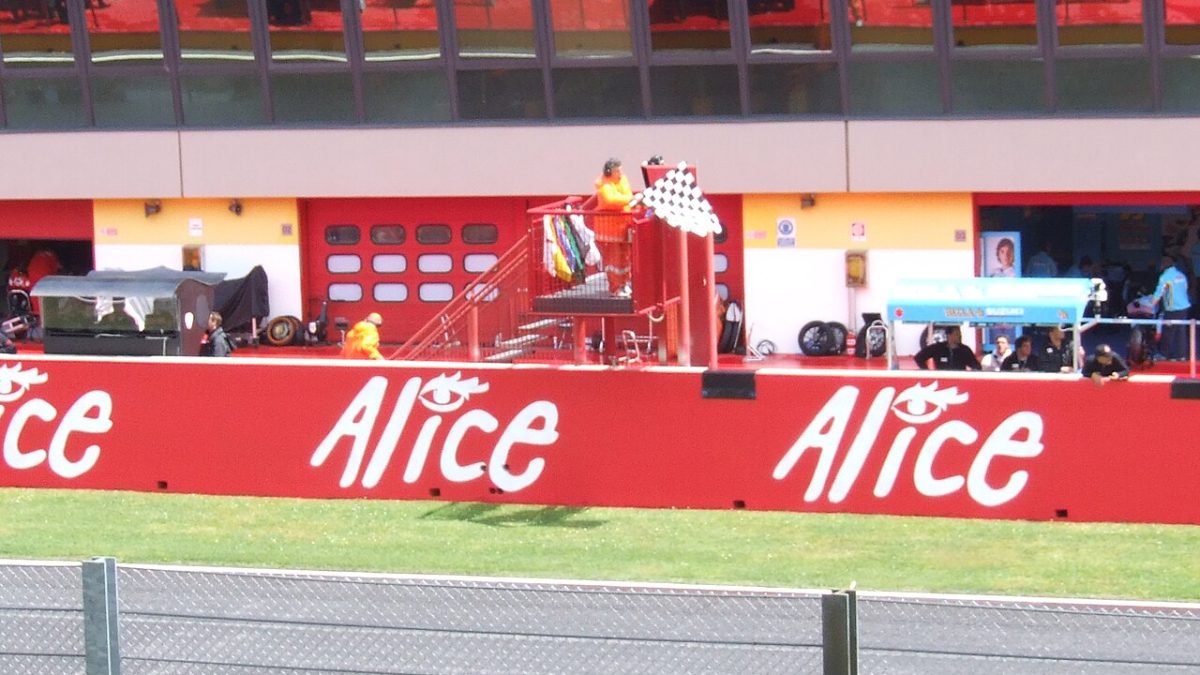
White signals a slow vehicle on the track, such as a recovery truck. The checkered flag ends the session.
Why Flags Matter for Strategy
Flags change the race. A yellow can freeze a battle, a safety car can bring a cheap pit stop, and a red flag stops everything. See how stops work in our pit stop guide.
How Flags Change the Race
Flags often change the race plan. A safety car can bring cars into the pits for tires, as explained in our pit stop guide. Penalties can change the finishing order, and the points for each place are listed in our points guide. The tires teams choose are covered in our tire guide.
Flags, light panels and the steering wheel
Every message from race control reaches drivers three ways. A marshal waves a flag from the post. A light panel at the same post shows the same signal. The steering wheel repeats it on the dashboard.
The light panel matters most at night or in heavy rain, when a flag is hard to read from a cockpit at speed. Marshals still use flags because they can react to something the panels have not been set for yet.
What a yellow flag does to a lap time
A yellow flag is not only a warning to slow down. In practice and qualifying, a lap set while yellow flags are showing in that sector is deleted, so a driver who backs off to be safe gains nothing either way.
On race day, overtaking is banned in the yellow zone. A pass made there is investigated, and it usually ends in a penalty. The rule exists for one reason: nobody should gain time where marshals might be standing on the track.
Blue flags and lapped cars
When a car is about to be lapped, the marshal shows a blue flag. The slower driver has to let the faster one past at the first safe opportunity and must not make a move that costs the leader time.
Ignore it and the stewards will read the radio transcript alongside the timing data. Repeatedly blocking a car that is a lap ahead is a penalty, not a misunderstanding.
Safety car and virtual safety car
Both slow the field so marshals can work. They do it differently.
Under the safety car, a real car leads the field and everyone queues behind it. Lapped cars may be waved past to unlap themselves. Teams use the moment to pit, because the whole field is running slowly and a stop costs far less time than usual.
Under the virtual safety car there is no car on track. Drivers must hit a minimum time in each sector instead, and the gaps stay close to what they were. A stop under the VSC is cheaper than a normal one but less generous than a full safety car.
After a red flag
The session is stopped. Cars return to the pit lane, or line up on the grid if the race is going to restart. Marshals repair barriers, clear debris and check the surface.
When a race restarts, the order is taken from a lap before the stoppage rather than from the moment the red flag came out. Drivers who pitted just before the stoppage can lose the gain they had made.
Want to see all of this live? Our 2026 F1 schedule in US time lists every remaining race with start times.
Frequently Asked Questions
The session is stopped. Cars return to the pit lane, and the race restarts when it is safe.
A faster car is about to lap the driver, who must let it pass.
It marks the end of the race or session.
Yes. Overtaking under yellow or ignoring a blue flag is investigated by the stewards and can bring a time penalty or a grid drop.
A black flag with an orange circle tells a driver the car has a mechanical problem and must come into the pits.
The safety car puts a physical car on track for the field to follow. Under the virtual safety car there is no car, and drivers must hit a minimum time in each sector instead.