F1 Parc Fermé Explained: Rules and Rain Hazard

Parc fermé in F1 is the period when teams cannot change a car’s setup or replace parts. Under the 2026 rules, a car enters parc fermé the first time it leaves the pit lane in qualifying and stays there until the race starts. A breach means a pit lane start. When a Rain Hazard is declared, limited extra work is allowed.
Last updated: October 22, 2026
What does parc fermé mean in F1?
Parc fermé is French for “closed park.” In F1 it describes a lock on the car. Once it applies, teams cannot swap parts or change the setup, apart from a short list of allowed jobs. Think of it as a lineup lock before game day: the car you qualify is the car you race.
That is the whole point. Without the lock, a team could build a qualifying-only setup for Saturday, then rebuild it into a race setup overnight. Parc fermé forces teams to choose one compromise and live with it. If you want the Saturday part of the story first, our guide to how F1 qualifying works covers it.
When does parc fermé start and end on a race weekend?
On a normal weekend, the FIA’s 2026 Sporting Regulations (Section B, Article B3.5.1) say each car is in parc fermé from the moment it first leaves the pit lane in qualifying until the race starts. A car that never leaves the pit lane in qualifying is treated as being in parc fermé at the end of Q1.
Three smaller details fill in the picture:
- Covers and seals. Within two hours of the end of qualifying, every car used in the session must be covered and ready for FIA seals. The FIA can extend that for one car per team for marketing purposes, by up to two hours (Article B3.4.3a).
- Seals come off early, the lock does not. Five hours before the scheduled formation lap, the seals and covers may be removed. The cars stay under parc fermé conditions until the race starts (Article B3.4.3b).
- Checks. Each car has one scrutineer assigned, plus an FIA parc fermé camera in the team’s garage area, to make sure no unauthorized work is done (Article B3.5.8). Teams also hand over a suspension set-up sheet before qualifying (Article B3.5.2).
What this means for U.S. fans in Austin
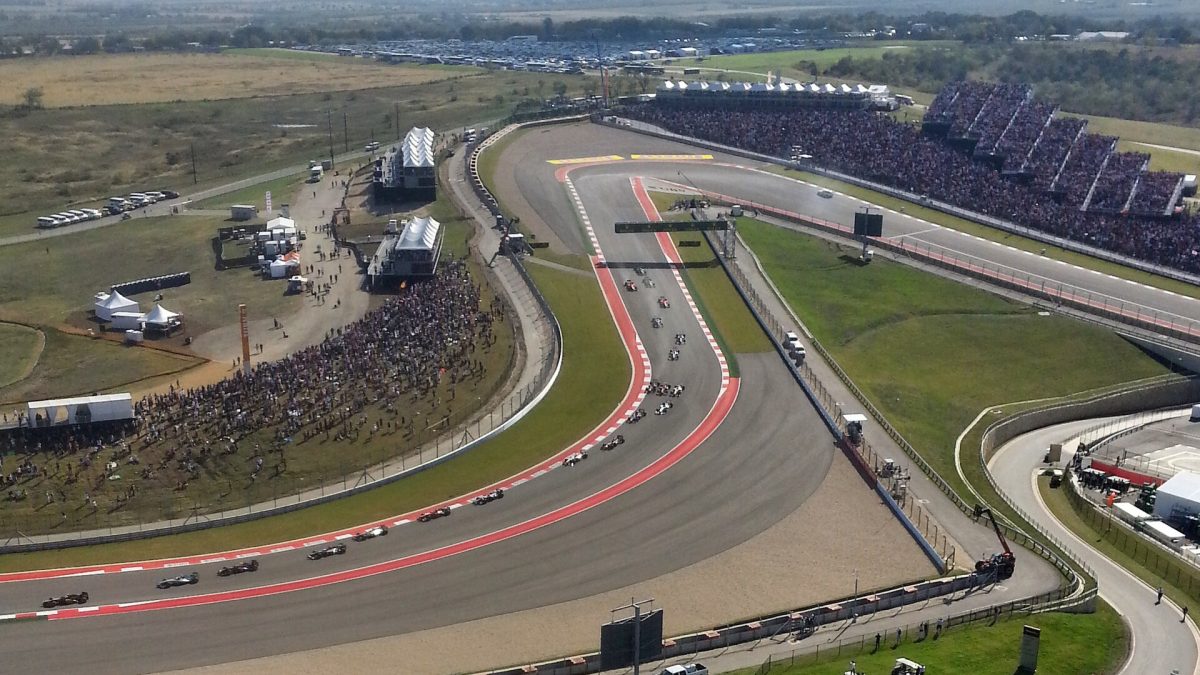
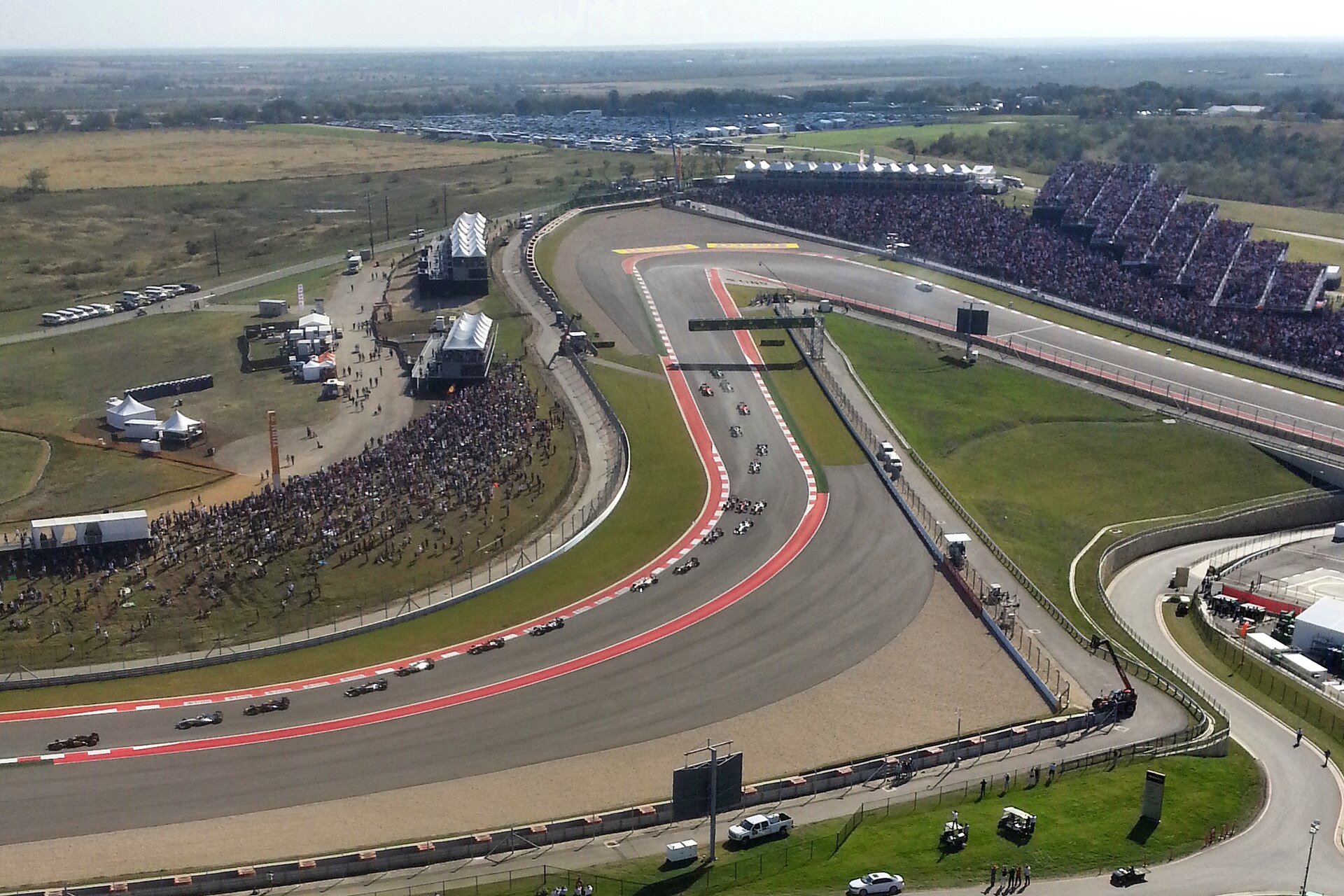
The 2026 U.S. Grand Prix is a standard weekend with no sprint, so the lock starts at one point and runs to the race.
| Session | Date | Central (CDT) | Eastern (ET) | Pacific (PT) |
|---|---|---|---|---|
| Qualifying (parc fermé begins when the first car leaves the pit lane) | Sat, Oct. 24 | 4 pm | 5 pm | 2 pm |
| Race (56 laps, parc fermé ends at the start) | Sun, Oct. 25 | 3 pm | 4 pm | 1 pm |
Times come from the official Formula 1 schedule and are subject to change; see our Austin 2026 race weekend schedule for the full timetable. For the rest of the weekend, the practical rule is simple: whatever the teams do after Saturday’s qualifying is limited by the lock.
What can teams still do under parc fermé?
Not a lot, but not nothing. Under Article B3.5.3, no part may be replaced or modified and no setup or configuration changes are allowed, except for work listed in the regulations’ technical appendix or approved by the FIA’s Technical Delegate.
The approval route works like this. A team writes to the Technical Delegate to ask for a change. The replacement part must be the same in design and similar in mass, inertia and function to the original. Any part that comes off stays in view of the assigned scrutineer, and the FIA keeps the removed parts (Article B3.5.4). The rules also say the aero and suspension must be sealed so that nothing can be changed without tools (Article B3.5.7).
There is one capped exception for bodywork. Six times a season, a team can ask to swap a front wing, rear wing, rear bodywork or floor for a different design, as long as that specification has already been used in pre-season testing, a sprint qualifying session or a qualifying session (Article B3.5.5).
What happens if a team breaks parc fermé?
At a standard-format weekend such as Austin, the driver must start the race from the pit lane (Article B3.5.3a). That is a different punishment from a grid drop. A grid drop moves a driver back from a qualifying position. A pit lane start puts them out of the main grid entirely, behind the field that leaves the pit exit. Our guide to F1 penalties explains how grid drops work for engine and gearbox parts, and our explainer on F1 pit stops covers how the pit lane works during a race.
Teams sometimes choose the pit lane start on purpose. If a car needs a setup rebuilt after a poor Saturday, a team can break parc fermé deliberately, change what it wants, and accept the pit lane start in exchange for a car they believe is faster on Sunday.
What is the 2026 Rain Hazard exception?
The FIA added a rain-specific exception to the lock. It sits in Article B1.5.11 of the 2026 Sporting Regulations.
- Trigger. If the Official Weather Service predicts a probability of precipitation greater than 40% at some point during the race, or at the Race Director’s sole discretion, a “Rain Hazard” may be declared.
- Deadline. For the race, the declaration must come no later than two hours before the start of qualifying. It stays in force until the end-of-session signal for the race.
- What changes. While a Rain Hazard is in force and a car is in parc fermé, other than when it is covered and sealed under the sealing articles, the work described in a separate FIA document, FIA-F1-DOC-080, may be carried out.
Two honest limits apply. First, the rulebook itself does not list the allowed work. It points to DOC-080, and we have not seen the contents of that document, so we do not describe it here. Second, the rule is not a free setup change: the sealing rules above still apply, so the window to work is limited.
The FIA has already used the rule this season. It published Rain Hazard declarations for the Miami Grand Prix and the Canadian Grand Prix, both citing the same article. Whether Austin gets one depends on the forecast, and a declaration would come before qualifying. For the wider rules picture, see our 2026 F1 car rules explained.
FAQ
What is parc fermé in F1?
Parc fermé is the lock on an F1 car after qualifying begins. Teams cannot replace parts or change the setup except for approved work. The goal is that the car that qualifies is the car that races.
When does parc fermé begin on a standard race weekend?
A car enters parc fermé the first time it leaves the pit lane in qualifying and stays there until the race starts. A car that does not leave the pit lane in qualifying is treated as being in parc fermé at the end of Q1.
Can teams change the car after qualifying?
Only in limited ways. Work listed in the regulations or approved by the FIA’s Technical Delegate is allowed. Anything else risks a pit lane start for the race.
What is a Rain Hazard in F1?
A Rain Hazard is a 2026 declaration made when the forecast puts the chance of precipitation above 40% during the race, or when the Race Director decides. While it is in force, work described in FIA document DOC-080 may be done on cars in parc fermé.
What happens if a car breaks parc fermé rules?
At a standard-format race, the driver starts from the pit lane.
Related reading
- How F1 qualifying works
- F1 penalties explained
- Austin 2026 race weekend schedule
- F1 pit stops explained
- 2026 F1 car rules explained
Apexline is an unofficial fan site and is not affiliated with Formula 1, the FIA or any team.