F1 Penalties Explained: Grid Drops, Time Penalties and Points

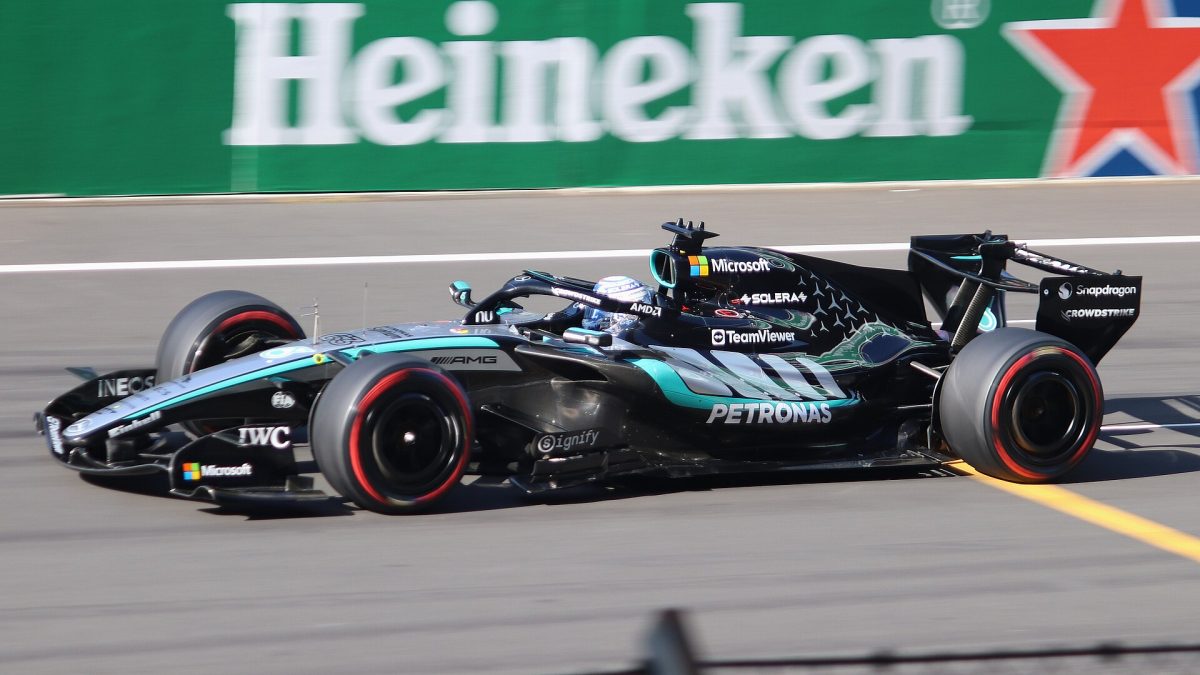
F1 penalties come in four forms: time penalties added to a driver’s race time, grid drops at the next race, super licence points (12 means a one-race ban) and disqualification. In 2026, each engine part over the season limit costs 10 places, which is how George Russell reached a 40-place drop in Singapore.
Last updated: October 20, 2026
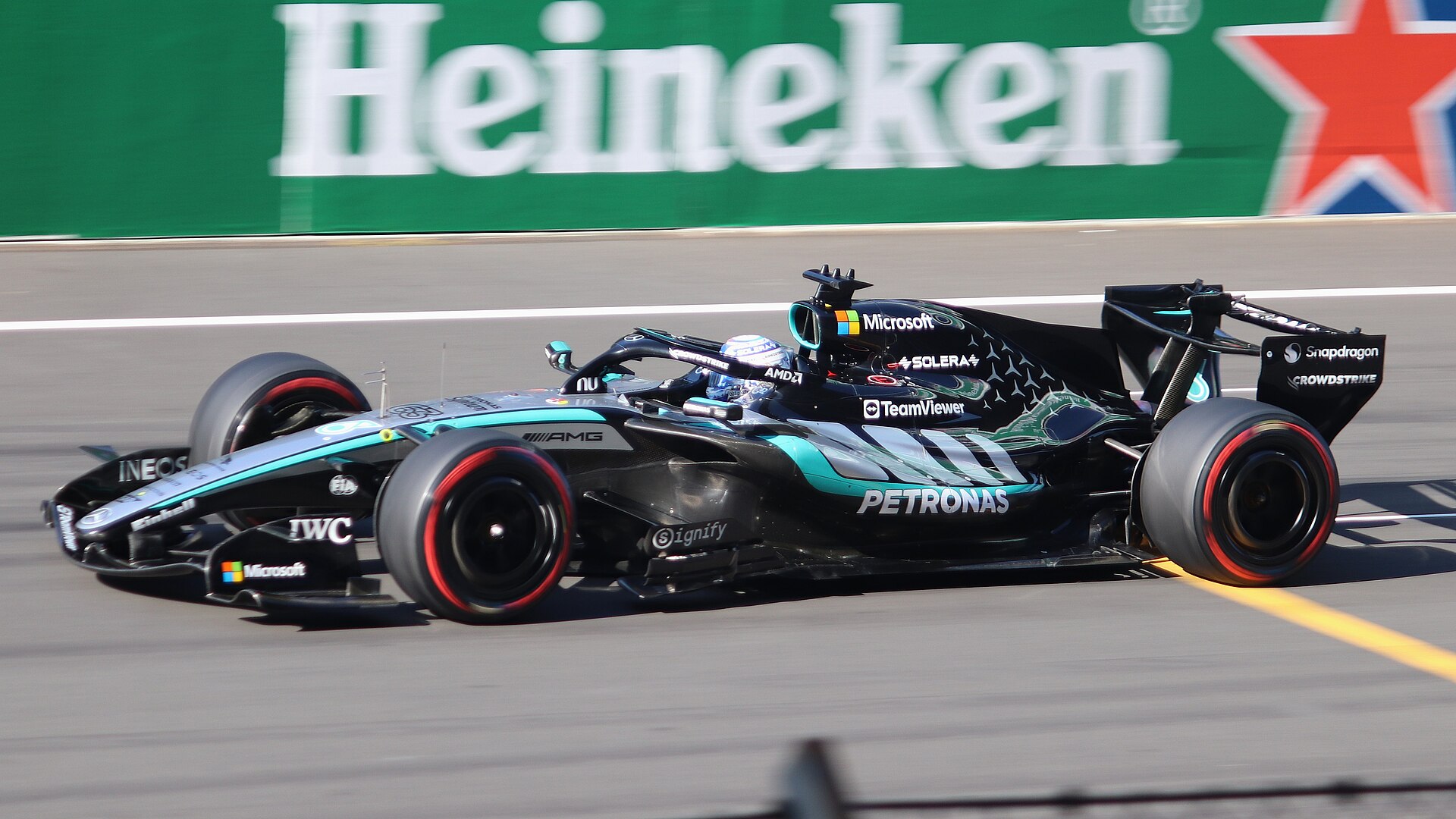
When Russell lined up at the back of the grid in Singapore, the headline said “40-place grid penalty.” That looks like a typo until you see how F1 penalties are counted. This guide explains every type of F1 penalty in plain English, how the 2026 engine limits create grid drops, and how Russell’s 40 places add up.
What are the main types of F1 penalties?
| Penalty | What it does | Typical trigger |
|---|---|---|
| Time penalty (5 or 10 seconds) | Added to the driver’s race time | Causing a collision, leaving the track and gaining an advantage |
| Drive-through | Driver must drive through the pit lane without stopping, then rejoin the race | More serious on-track offences, speeding in the pit lane |
| Stop-and-go | Driver must stop in their pit box for at least 10 seconds, then rejoin | Serious offences, often when a time penalty would not be enough |
| Grid penalty | Drops the driver down the starting order of a race | Power unit changes, an earlier incident, five reprimands |
| Penalty points | Added to the driver’s super licence for 12 months | Collisions and other offences judged by the stewards |
| Disqualification | Removes the driver from the results | Technical breaches, very serious misconduct |
The FIA lists these penalties in its 2026 penalty guidelines.
How do time penalties work?
Time penalties are the most common. The stewards add five or ten seconds to the driver’s race time, and most of the time you will hear this as “he picked up a five-second penalty.”
What happens next depends on the driver’s strategy:
- If the driver pits, the time is served at the pit stop. Our pit stop guide shows how long a normal stop takes, so you can see why a penalty at the wrong moment can wreck a race.
- If the driver does not pit again, the time is added to the finishing time after the flag.
Stewards can also hand out a penalty after the race. In that case the time is added to the final result, and positions can change hours later.
Offences such as ignoring a flag signal can also lead to penalties. Our F1 flags explained guide covers what each flag means.
How do grid penalties work?
A grid penalty is served in the next race rather than the current one. It moves the driver backward from the position they earned in qualifying. There are two common causes.
1. Power unit changes. The most common reason in 2026. Each driver gets a fixed number of engine parts for the whole season, and using more costs places on the grid.
2. Reprimands and earlier incidents. A driver who collects five reprimands in a season, with at least four for driving offences, takes a 10-place grid drop at the next race. This rule appears in the FIA’s penalty guidelines and in Red Bull’s summary of the regulations. All warnings reset at the end of the year.
Your starting position is still decided in qualifying, so if you are new to that format, read our qualifying explainer first. The penalty is applied after Saturday, and the grid is shuffled before Sunday.
What are the 2026 engine limits?
Each driver can use a set number of each power unit part per season. For 2026, every limit has one “bonus” part added to the base allowance, according to Formula 1’s guide to power unit penalties.
| Power unit element | Base allowance | 2026 limit with bonus |
|---|---|---|
| Internal combustion engine (ICE) | 3 | 4 |
| Turbocharger (TC) | 3 | 4 |
| Exhaust (EX) | 3 | 4 |
| Motor generator unit, kinetic (MGU-K) | 2 | 3 |
| Energy store (ES) | 2 | 3 |
| Control electronics (CE) | 2 | 3 |
A new manufacturer also gets an extra allowance in its first supply year.
Two rules make this system strict:
- A part counts as used once the car’s timing transponder shows it has left the pit lane during an official session. Parts are sealed, so teams cannot swap them in secret.
- The penalty scale is 10 places the first time an element goes over its limit and five places for each later one, according to Formula 1’s guide. Penalties from different elements add up.
If the total reaches more than 15 places, the driver does not just drop 15. They start at the back of the grid.
For more on the 2026 hardware itself, see our 2026 F1 car rules explained guide.
Worked example: how Russell got 40 places

Russell’s engine failed in Malaysia with five laps to go while he was running third, according to PlanetF1 and Times Live reports. That used up his season allocation, so Mercedes brought forward a new power unit for the Singapore weekend.
The FIA stewards counted four elements over the limit:
- Fifth internal combustion engine: 10 places
- Fifth turbocharger: 10 places
- Fifth exhaust: 10 places
- Fourth MGU-K: 10 places
Four elements at 10 places each is 40 places. Because that is more than 15, Russell started at the back, as long as he was classified in qualifying. You can read how that weekend played out in our Singapore results report.
Russell has also said he expects one more engine penalty before the season ends, according to Times Live.
A second example: Antonelli at Monza
Championship leader Kimi Antonelli took his own penalty earlier in the year. Mercedes reportedly chose Monza because overtaking is easier there, and the FIA set the drop at 30 places: a fifth ICE, a fourth control electronics unit and a fourth energy store, at 10 places each. The same table explains both penalties.
This is the planning game teams play. A grid drop hurts most on a track where passing is hard, so teams try to take their penalty at a circuit where it costs less.
What are penalty points on a super licence?
Penalty points work like a driving record. The stewards add points to a driver’s super licence for offences such as collisions, and the points stay for 12 months.
- At 12 points, the driver is banned from the next race.
- After 12 months, points that did not reach the limit expire.
Kevin Magnussen was the first driver stopped by this system. He reached 12 points and missed the 2024 Azerbaijan Grand Prix. Max Verstappen picked up eight points in 2024, and two of them expired after June 30, 2025, according to Red Bull’s penalty guide.
Penalty points are separate from the championship points drivers score in races. For those, see our F1 points system explained.
Why penalties matter this weekend
Austin is not one of the six sprint weekends on the 2026 calendar, according to the official sprint calendar. Our Austin 2026 schedule has the session times. With no sprint to shuffle things, any grid penalty announced before qualifying matters more, because it directly changes who starts where on Sunday. Watch the FIA’s grid penalty list on Saturday evening.
FAQ
A grid penalty moves a driver back from their qualifying position at the start of a race. It is most often caused by using more power unit parts than the season allows.
The first time a driver goes over the limit for a part, the penalty is 10 places. Each later overage costs five. Penalties from different parts add up, and anything over 15 places means a start from the back of the grid.
The 2026 limit is four internal combustion engines per driver for the season, which is the base allowance of three plus one bonus unit.
The driver is banned from the next race. Points expire after 12 months if the limit is not reached.
No. A time penalty is added to a driver’s race time or served during a pit stop. A grid penalty is a different punishment and changes where the driver starts.
He used four power unit parts beyond his season limit, and each one carries a 10-place penalty. Four times ten is 40.
Related reading
- F1 Singapore results 2026: how the race played out
- F1 qualifying explained: how the starting grid is set
- 2026 F1 car rules explained: what changed with the new power units
- F1 points system explained: championship points, not penalty points
Apexline is an unofficial fan site and is not affiliated with Formula 1, the FIA or any team.