F1 Pit Stops Explained: Why a Few Seconds Decide Races

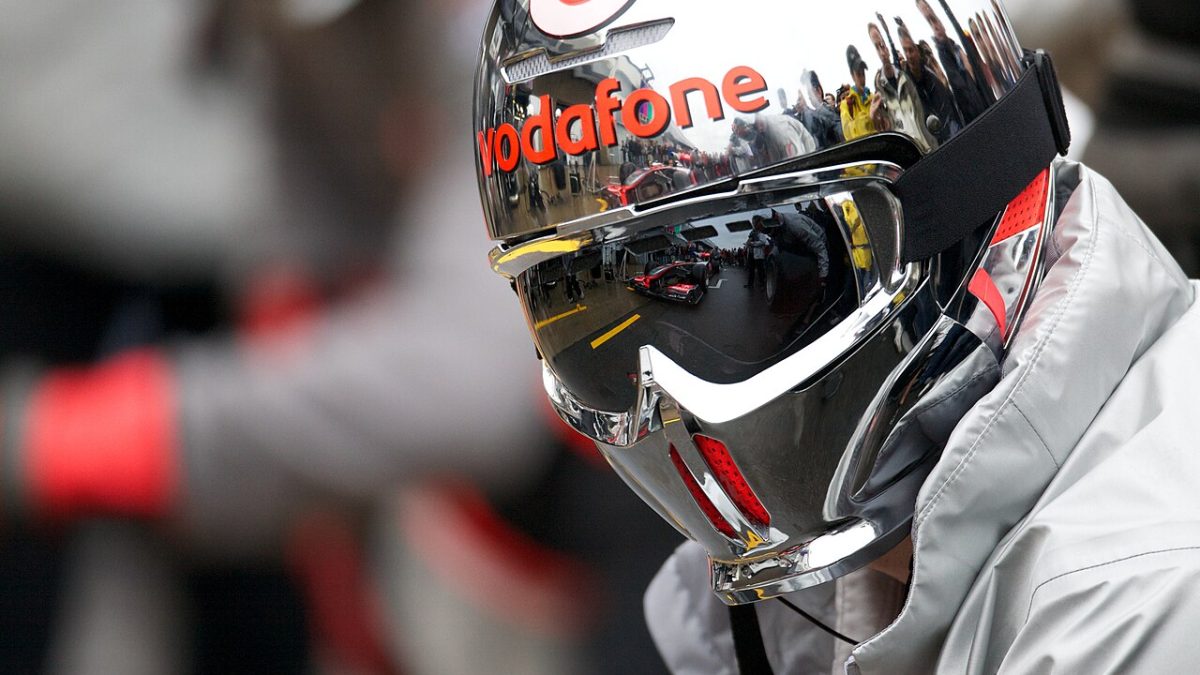
An F1 pit stop is when a driver leaves the track to change tires or repair the car, usually in a few seconds stationary. Cars stop in a marked box in the pit lane, which has an 80 km/h (about 50 mph) speed limit. In a dry race, each driver must use at least two different dry tire specifications.
Last updated: November 15, 2026
What happens in an F1 pit stop?
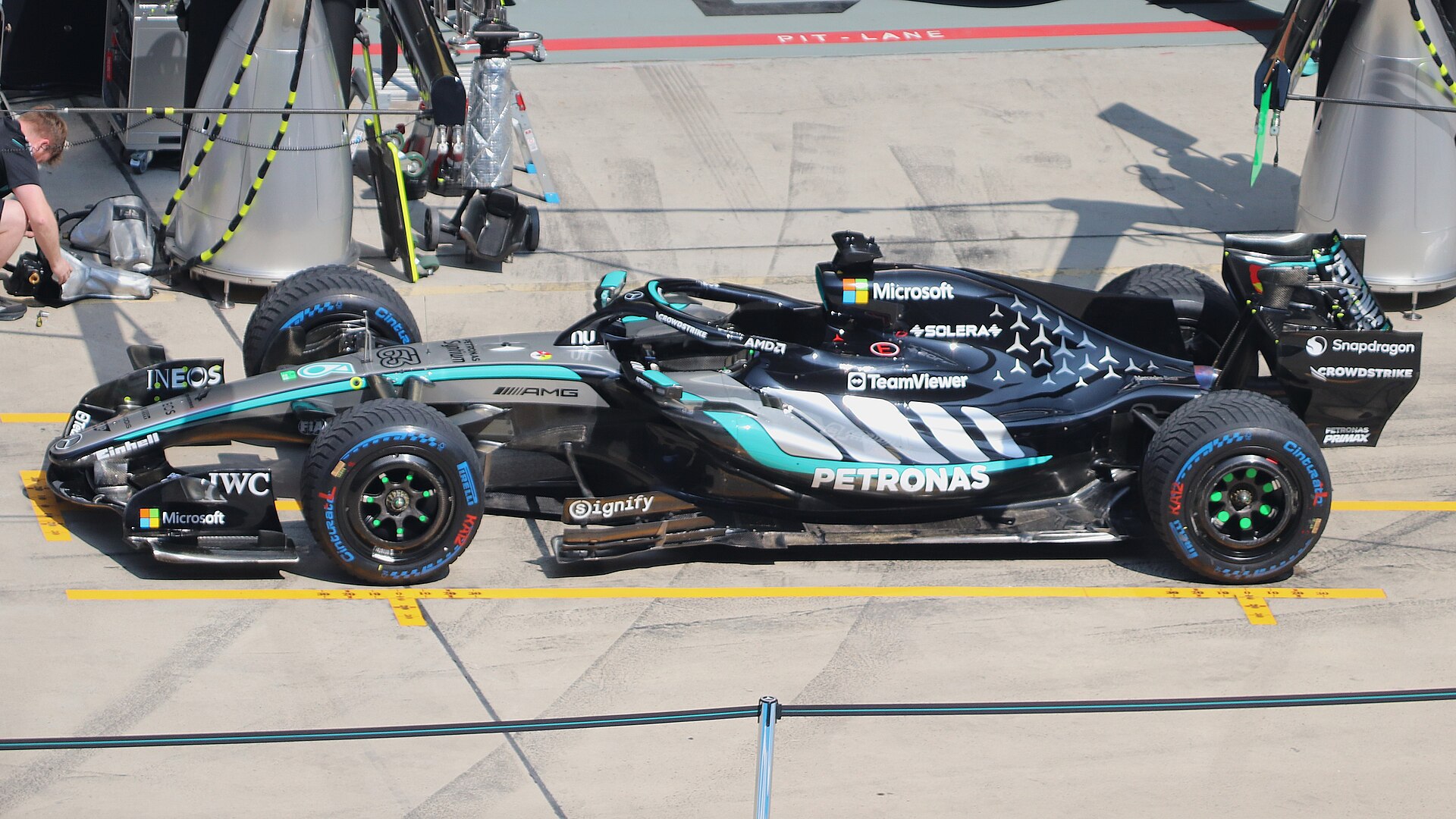
The driver enters the pit lane, slows to the limit and stops in the team’s own marked box. The crew changes the tires, or repairs or adjusts the car, and the driver rejoins the race when the lane is clear. The FIA calls that box the “Designated Pit Stop Position,” and each team gets one inside its own garage area (Article B1.6.1 of the FIA 2026 Sporting Regulations, Section B, Issue 09).
Where do teams work on the car?
The pit lane is split into two lanes. The one next to the pit wall is the fast lane, no more than 3.5 meters wide, and teams may not work on a car or leave equipment there. The inner lane is the only area where work on a car is allowed, and even there the work must not hinder cars trying to leave. Teams also may not use a powered device to lift a car in the pit lane, and each team must fit a pit stop camera above its box that always stays uncovered during a race or sprint.
What is the pit lane speed limit in F1?
The limit is 80 km/h, about 50 mph, for the whole competition. The Race Director can change it to keep things safe, and the speed can be lower at some tracks. The penalty for exceeding it depends on the session:
| Session | Penalty for exceeding the pit lane limit | Article |
|---|---|---|
| Practice, qualifying, sprint qualifying | Fine of €100 for each km/h over the limit, up to €1,000 | B1.6.3a |
| Race or sprint | 5-second penalty, 10-second penalty, drive-through or stop-and-go, at the stewards’ choice | B1.6.3a |
The stewards can add a further penalty if they suspect a driver sped in the pit lane to gain an advantage. For how time penalties work, see our guide to F1 penalties.
Why do F1 drivers have to pit?
Tires wear out, and the rules force a stop in most dry races. Unless a driver has used intermediate or wet-weather tires, each driver must use at least two different dry-weather tire specifications during the race, and at least one must be a mandatory race specification (Article B6.3.6). A driver who fails is disqualified from the race results. Teams also stop for damage, repairs and changes of strategy. Our tire compound guide explains the choices.
What is an unsafe release?
A car must not be released from its box in an unsafe condition. If a car is deemed to have been released unsafely, the stewards can drop the driver grid positions in qualifying or sprint qualifying. In a race or sprint the driver gets a stop-and-go penalty (Article B1.6.2b). That is why the crew signals the driver only when the car is ready and the lane is clear.
How do time penalties get served?
A 5-second or 10-second penalty is served in the pit lane. The driver stops in the box for at least that long and then rejoins. In general the driver must serve it the next time they enter the pit lane. The driver may instead choose not to serve it, provided they make no further stop, and then the time is added to the finishing time (Article B1.9.6).
What is the undercut and the overcut?
An undercut means pitting before a rival to get fresh tires and a faster lap, so the driver comes out ahead when the rival stops. An overcut means staying out longer while the rival is stuck in traffic after a stop, and then pitting later on cleaner track. Both work only if the tire advantage outweighs the time lost in the pit lane.
Why does a safety car change pit stops?
Under a safety car or virtual safety car the field slows down, so a stop costs less time than at racing speed. Teams watch for that chance. Our guide to safety car vs virtual safety car explains the difference between the two.
Can F1 cars refuel in a pit stop?
No. The regulations allow refuelling only in the teams’ designated garages, at no more than 0.8 liters per second, so a pit stop in the pit lane is for tires, repairs and adjustments (Article B1.5.9).
F1 pit stops: frequently asked questions
The FIA rules do not set a stop time. The stationary time is only a few seconds, but the driver also loses time slowing down and driving the length of the pit lane at 80 km/h.
80 km/h, about 50 mph, during the whole competition. The Race Director can change it for safety.
In most dry races, yes. Unless they use intermediate or wet tires, each driver must use at least two different dry-tire specifications during the race, which forces at least one stop.
Releasing a car from its pit box in an unsafe condition. The stewards can drop the driver grid places in qualifying, or give a stop-and-go penalty in a race or sprint.
No. Refuelling is allowed only in the designated garages, so pit stops are for tires, repairs and adjustments.
Related reading